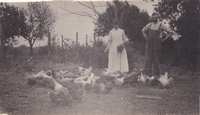
This candid snapshot, captured circa 1915, offers an intimate glimpse into the daily life and agricultural pride of Charles Heinrich Haushalter and Anna Louise Zdunek on their 50-acre farm in Water Valley. This image depicts the couple in their element: the chicken yard. The presence of the Plymouth and Barred Rock chickens is particularly significant; these breeds were not merely livestock but a point of professional distinction for Charles, who would go on to earn various county and state fair awards for them in the years following this photograph. The image captures a moment of domestic industry, illustrating the close relationship between the Haushalter family and the land they would steward for generations.
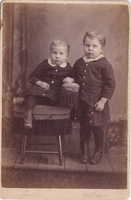
This formal portrait captures brothers Charles (left) and William (right) Haushalter around 1884–1886. Likely standing in a studio in the Hamburg or Buffalo area, the boys are dressed in the peak formal attire of the era: matching heavy wool tunics, metallic buttons, and stiff, scratchy white lace collars. Because albumen prints of the 1880s still demanded long, unblinking exposure times, both brothers wear the characteristically intense, deadpan expressions of children commanded to freeze under a photographer’s strict glare.
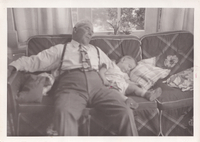
Charles and grandson John have fallen asleep sitting together on the farmhouse porch glider while listening to the family Victrola play "Marching through Georgia", c. 1947
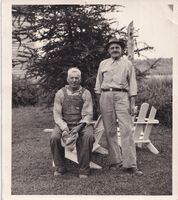
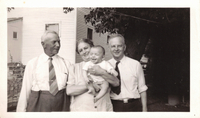
Charles sits on arm of adirondack chair, Mr. Reichert standing to right; Charles hat in hand, Reichert on head; back yard of Haushalter farmhouse c. 1946
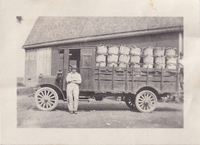
Captured circa 1920, this image depicts Charles Heinrich Haushalter standing beside his 1920 Service Motor truck, loaded with crates of produce ready for a 2:00 AM trip to market. This photograph captures a pivotal moment in American agricultural history: the transition from horse-drawn wagons to the reliability of motorized transport. The heavy load and the ruggedness of the Federal truck underscore the grueling, early-morning labor required to maintain the Haushalter farm in Water Valley, New York. Charles, dressed in practical work overalls, represents the hardworking backbone of the Hamburg community—a man who was not only a farmer but a founding member of the local Rod and Gun Club and an active participant in the Erie County Growers and Shippers' Association.
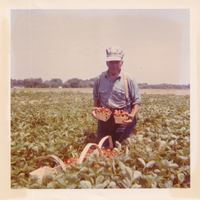
In the sun-drenched rows of the Water Valley farm, Charles Haushalter stands as a bridge between the grit of agrarian labor and the promise of the next generation. Captured around 1960, this moment shows Charles amidst a bountiful strawberry harvest, holding the very fruit that would help fund his grandson John’s journey to Harvard. The image captures the dual nature of the Haushalter legacy: it is simultaneously a record of disciplined stewardship and a backdrop for the spirited chaos of family life. While the strawberries represented a serious investment in academic opportunity, family recollections also recall the lighter side of the harvest, with the berries occasionally being used as ammunition by the grandchildren in playful skirmishes against passing cars, as recorded in Carl Haushalter's 2004 catalog note: "Dad with strawberrys [sic] ready for Jim and Kurt to throw at passing non-buyers' cars."
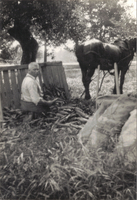
This candid snapshot captures Charles Heinrich Haushalter engaged in the seasonal labor of sorting corn on the family farm. Taken under the shade of the farm's "old apple trees," the image provides a glimpse into the manual rhythms of mid-20th-century agriculture. Charles, a tireless worker, is seen here in his natural element, performing the essential tasks that sustained the Haushalter legacy for generations. The presence of his horse, Dan, in the background serves as a visual reminder of the close partnership between farmer and animal that was central to the era's agricultural life.
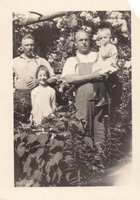
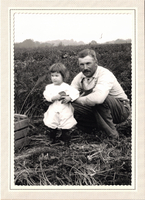
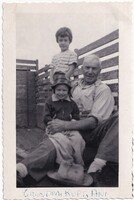
Captured in the utilitarian bed of a Stewart farm truck, this 1956 snapshot offers a tender glimpse into the generational continuity of the Haushalter farm. The image moves beyond a simple family portrait, placing the subjects directly within the tools of their livelihood. As Charlie Haushalter holds young grandson, his granddaughter standing watch behind them, the photograph captures a quiet intersection of domestic affection and the rugged reality of rural life in Water Valley. It is a moment of stillness amidst the seasonal rhythms of the fifty-acre property, documenting a period when the family’s presence was deeply woven into the landscape and the machinery that sustained it.
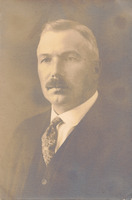
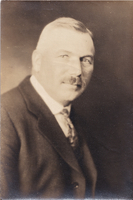
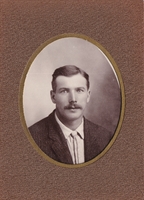
This portrait captures Charles Heinrich Haushalter in his young adulthood, likely during the period between 1905 and 1910. This era was a transitional time in Charles's life, spanning his years working as a logger in the timberlands of Coeur d'Alene, Idaho, and his eventual return to the Haushalter family farm in Water Valley, New York. His neat grooming—characterized by a well-maintained mustache and a classic Edwardian side-parted hairstyle—and his formal attire reflect the dignity and intentionality of early 20th-century portraiture. While the biographical record remembers him as a rugged, tireless farmer and a pillar of the Hamburg community, this image offers a rare, polished glimpse of the man behind the labor, capturing a moment of quiet composure before he took up the mantle of managing the family's 50-acre farm.