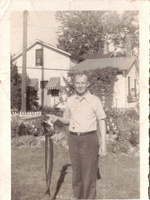
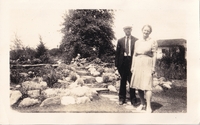
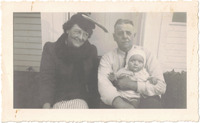
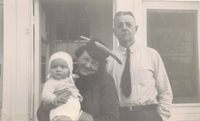
5 photo booth strip photos of Michael Stunick, set of 2 attached to set of 3; costumed--cowboy, police bobby, American football player, tennis player, self, c. 1926
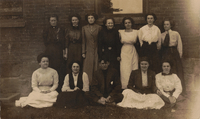
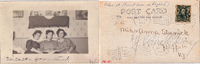
Group photo of Minnie Stunick's Teachers' Training Class taken May 28, 1910 grouped in two rows in front of brick facade; front of picture-postcard with divided back
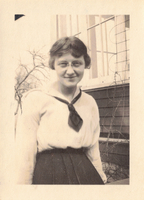
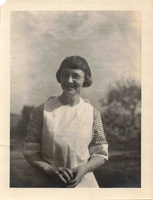
Captured in the soft light of Water Valley around 1920, Wilhelmine "Minnie" Zdunek (1892–1966) radiates a quiet, modern confidence. Dressed in a fashionable middy blouse—a staple of the era’s youthful style—she stands near the Haushalter home, perhaps during a moment of respite from the seasonal rhythms of Erie County. As the sister of Anna Louise (Zdunek) Haushalter (1885–1959), Minnie was deeply woven into the social fabric of the farm. This portrait, taken just a few years before her marriage to David Roy Thomas, offers a glimpse of a woman on the cusp of a new chapter, bridging the traditional agricultural roots of her family with the shifting sensibilities of the early twentieth century.
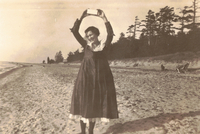
Standing on the Lake Erie shore, on the beach of Pine Lodge in Angola, Minnie Zdunek (1892–1966) hoists a small box or book toward the sky like a trophy. The composition is defined by the high-contrast play between her dark wool dress and the white froth of her petticoat against the wild treeline. The image radiates a spirit of autonomy and unscripted joy, celebrating the very technology that allowed the sisters to document their own lives.
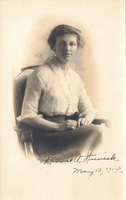
Dated May 13, 1914, this portrait was produced by the H.A. Meldrum Co. Studio, the high-end photographic department of Buffalo’s famous Main Street store. Printed on heavy art paper, this platinum portrait's lack of a silver emulsion means the image will never tarnish. Wearing her intellectual spectacles and a delicate, ruffled blouse, Minnie presents a portrait of calm, educated poise. The physical texture of the paper gives the image a tactile, charcoal-like depth, capturing Minnie as a woman stepping fully into her own adulthood with a direct, unblinking gaze.
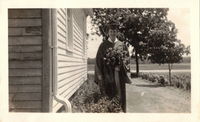
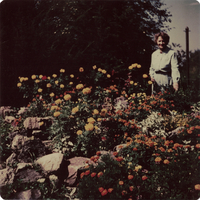
Minnie stands outside Thomas home on Gowanda State Rd in grad cap and gown holding a large bouquet of flowers; believed to be dressed for next generation's graduation ceremony, 1938
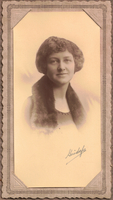
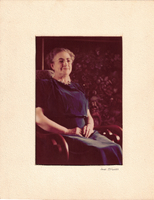
In this striking portrait, Wilhelmine "Minnie" Zdunek (1892–1966) meets the camera with a steady, poised gaze. Captured by the Geisdorfer studio in Buffalo during the mid-1920s, the image utilizes a soft-focus technique that was the height of fashion. Minnie’s finger-waved bob and luxurious fur collar speak to a woman of grace and modern sensibility. The masterful, richly toned finish allows her features to emerge with a luminous, painterly quality, creating an intimate, timeless connection between the subject and the viewer.
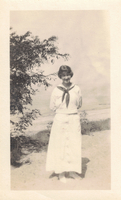
Standing against the serene shoreline of Lake Erie at Pine Lodge in Angola, Wilhelmine "Minnie" Zdunek (1892–1966) captures a moment of quiet leisure. Minnie exudes the effortless grace of a young woman navigating a changing world. Her sailor-style middy blouse and long skirt reflect the popular seaside fashions of the era, a stark departure from the structured domesticity of the farm. This image, set against the natural beauty of the lake, offers a rare glimpse into the recreational life of the Zdunek family, momentarily stepping away from the agricultural rhythms of Erie County to find peace by the shore.
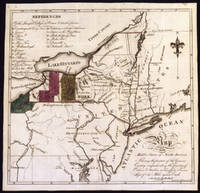
A Map of the Middle States of North America, Showing the position of the Geneseo Country comprehending the Counties of Ontario & Steuben as laid off in Townships of Six Miles square Each
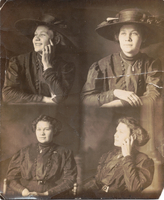
This "multiplex" strip captures Clara Zdunek in a rare moment of experimental play. Probably taken in a Buffalo "penny" studio, these silver gelatin frames represent the quick, affordable side of urban photography. The multiplex camera allowed for four distinct exposures on one plate, encouraging the sitter to shift her persona. Clara transitions from a pensive, chin-propped gaze to a radiant, open-mouthed laugh—a level of spontaneity rarely seen in formal portraiture. The strip documents the youthful energy of a woman navigating the modern city, using the artifice of the studio to perform the many facets of her personality.
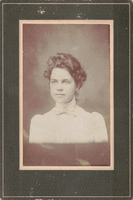
This formal studio portrait captures Anna Zdunek (later Stunick and Haushalter) at the age of fifteen (as indicated by a hand-written note on the reverse), likely taken around 1900. The image reflects the transition from the Victorian to the Edwardian era, evidenced by her high-collared white blouse and soft, classically styled hair. As a young teenager living in Angola, New York, at the turn of the century, Anna is presented here with the dignity and poise typical of professional portraiture of the period.