

Items
-
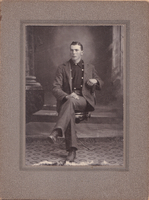
A Moment of Stillness: Charles Heinrich Haushalter c. 1905–1910
Charles Heinrich Haushalter (1880–1963) sits for a portrait that bridges two vastly different worlds. Dressed in a sturdy, patterned jacket and formal waistcoat, he presents a composed version of himself that belies the rugged reality of his years in the Coeur d’Alene logging camps. Whether captured in a professional studio in Idaho or just before his return to the family farm in New York, the image captures a man in transition. This is a moment of stillness for a man whose labor defined the turn of the century—moving from the wild timberlands of the West back to the ancestral soil of Water Valley to ensure the farm's survival. -
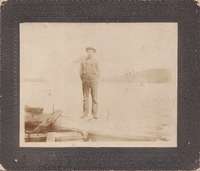
At the Edge of the Woods: Charles Heinrich Haushalter c. 1900–1907
Unlike the polished studio portraits of the era, this image captures Charles Heinrich Haushalter (1880–1963) in his true element: the rugged periphery of the Idaho wilderness. Standing at the terminus of a logging road near the shores of Lake Coeur d'Alene, Charles wears the practical uniform of a woodsman—sturdy trousers, suspenders, and a wide-brimmed hat. The photograph carries a profound sense of place, anchored by family lore that identifies this exact spot through the memory of a friend. It serves as a visual testament to the years Charles spent navigating the timberlands of the West before the call of the family farm in New York brought him home. -
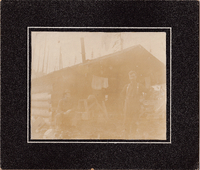
Charlie Haushalter in Coeur d'Alene, Idaho c. 1907
Charlie stands by a rough log cabin in Coeur d'Alene during his logging days. Another unknown man is seated by the cabin. -
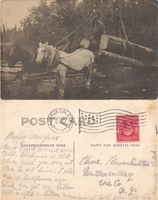
Dec 30, 1908 Postcard to Charles Haushalter
Postcard addressed to Charles Haushalter in Water Valley postmarked Dec 30, 1908 in Coeur d'Alene, Idaho -
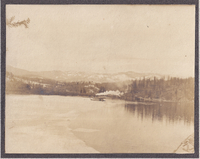
Steam and Timber at Mica Bay c. 1905
The rugged expanse of Mica Bay captures the industrial heart of the Idaho Panhandle during the early 1900s. In this view of Coeur d'Alene, the stillness of the water is broken by a plume of steam, signaling the relentless machinery of the logging industry. For Charlie Haushalter (1880–1963), these landscapes were not merely scenic vistas but demanding workplaces defined by timber, water, and heavy labor. This image serves as a window into a formative chapter of the Haushalter journey—a time spent amidst the log chutes and mountain camps of the West before the family's focus settled back onto the ancestral soil of New York. It captures a moment of transition, where the raw energy of the American frontier met the individual grit of a young man finding his way. -
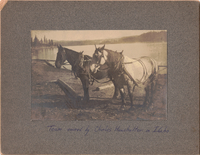
The Engines of the Timberlands c. 1905
In the rugged landscape of Coeur d’Alene, Idaho, between 1901 and 1907, the rhythm of life was dictated by the strength of muscle and the pull of timber. This photograph captures a working team owned by Charles Heinrich Haushalter (1880–1963) during his years in the logging camps. These draft horses were more than just animals; they were the essential engines of the Pacific Northwest timber industry, navigating the shoreline and heavy logs that defined the era's frontier economy. The image serves as a quiet testament to the grit required of a young man far from the settled fields of New York, finding his footing in the demanding, sawdust-scented world of Idaho logging. -
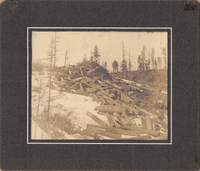
Timber of the Panhandle c. 1905
In the biting chill of the Idaho Panhandle, the scale of the American frontier is measured in timber. This photograph captures a massive accumulation of felled logs, likely a staging area in the Coeur d'Alene region during the early 1900s. For a young Charles Haushalter (1880–1963), these years spent in the logging camps represented a period of grueling physical endurance and seasonal rhythms dictated by the snow and the saw. The sheer volume of the timber, resting heavily against the winter landscape, speaks to the industrial hunger of a nation expanding westward.